Welcome to SKP Research Group
Material Chemistry Laboratory
Tarsadia Institute of Chemical Science
Uka Tarsadia University, Maliba Campus, Gopal Vidyanagar,Bardoli, Mahuva Road, Surat-394350, Gujarat, India


Push-Pull NIR Organic Materials and Aggregates
Near-infrared (NIR) dyes are organic or inorganic chromophores that absorb and/or emit light in the near-infrared region (≈700–1700 nm). Owing to low background interference, deep tissue penetration, and minimal photodamage, NIR dyes are widely used in bioimaging, photodynamic/photothermal therapy, optical sensing, and optoelectronic devices.In solution or solid state, NIR dyes often undergo aggregation, significantly influencing their photophysical behavior. Depending on molecular packing, aggregates are classified as H-aggregates (face-to-face stacking, leading to blue-shifted absorption and fluorescence quenching) and J-aggregates (head-to-tail arrangement, characterized by red-shifted, sharp absorption bands and enhanced exciton delocalization). J-aggregates are particularly attractive for NIR applications due to their intense absorption, narrow bandwidth, and sometimes improved fluorescence efficiency.


Covalent Organic Framework (COF)
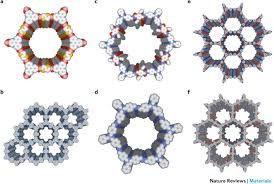
Covalent Organic Frameworks (COFs) are a class of crystalline, porous materials constructed from light elements (such as C, H, B, N, and O) linked together through strong covalent bonds. They form two- or three-dimensional ordered networks with high surface area, low density, and tunable pore sizes. COFs are designed using reticular chemistry, where molecular building blocks are connected via reversible reactions (e.g., imine, boronate ester, hydrazone linkages), enabling high crystallinity and structural precision. Due to their modular design, COFs exhibit excellent thermal and chemical stability and allow precise functionalization of pore walls. These properties make COFs attractive for applications in gas storage and separation, catalysis, sensing, energy storage, optoelectronics, and drug delivery. Their ordered π-conjugated structures also enable promising photophysical and electronic properties

Metal Organic Framework (MOF)

Metal–organic frameworks (MOFs) are a class of crystalline porous materials constructed from metal ions or metal clusters coordinated to organic ligands. This coordination results in highly ordered three-dimensional networks with exceptionally high surface areas and tunable pore sizes. Owing to their structural versatility and chemical tailorability, MOFs have attracted significant interest for applications in gas storage and separation, catalysis, sensing, drug delivery, and energy storage.
Hydrogen-Bonded Organic Framework (HOF)

Hydrogen-bonded organic frameworks (HOFs) are a class of crystalline porous materials constructed from organic building blocks that assemble through directional hydrogen-bonding interactions. Unlike metal–organic frameworks (MOFs) or covalent organic frameworks (COFs), HOFs rely on noncovalent hydrogen bonds to form ordered, extended networks. This bonding strategy enables high structural tunability, solution processability, and facile recyclability. HOFs often exhibit permanent porosity, high surface areas, and good chemical stability, making them attractive for applications in gas storage and separation, molecular recognition, sensing, and catalysis.
Photochemistry of Organic and Inorganic Materials

Photochemistry of Organic and Inorganic Materials deals with the chemical and physical processes that occur when materials interact with light. In organic materials, photochemical phenomena involve electronic excitation of molecules, leading to processes such as fluorescence, phosphorescence, photoisomerization, photopolymerization, and charge transfer. These effects are widely exploited in organic photovoltaics, light-emitting devices, sensors, and photoresponsive polymers.
In inorganic materials, photochemistry primarily involves electronic transitions within metal ions, coordination complexes, semiconductors, and metal oxides. Light absorption can generate excited states, electron–hole pairs, or reactive species that drive photocatalysis, photoelectrochemical reactions, and luminescence. Such processes are central to applications including solar energy conversion, photocatalytic water splitting, environmental remediation, and optoelectronic devices.
Ionic Liquid


Ionic liquids are salts composed entirely of ions that exist in the liquid state at or near room temperature (typically below 100 °C). They usually consist of bulky organic cations paired with inorganic or organic anions, which prevents efficient crystal packing and lowers their melting points. Ionic liquids exhibit unique properties such as negligible vapor pressure, high thermal and chemical stability, wide electrochemical windows, and tunable polarity and solvation behavior. Owing to these features, they are widely used as green solvents, electrolytes, catalysts, and reaction media in areas including organic synthesis, electrochemistry, materials science, and separation technologies.
"Great things are done by a series of small things brought together"
Vincent van Gogh



CONTACT UKA TARSADIA UNIVERSITY
Web page: http://www.utu.ac.in/


©2025 by Sumit K Panja, Uka Tarsadia University. Proudly created with Wix.com